
Ceasefire. Now What?
A conversation with Oglala Lakota land defender Nick Tilsen on white supremacy, Zionism, and how to achieve collective liberation.

🎧 Listen to Episode 3 of A People’s Climate: It’s Never A Strategy To Remain Quiet With Nick Tilsen
A ceasefire was finally declared on Friday October 10th. Relief, rage, grief, disbelief, all at once. After nearly two years of a relentless genocide by US-backed Israel, Gaza’s obliteration sits heavy on the world’s conscience. Two years of Israeli attacks have killed at least 67,000 Palestinians, with thousands more still buried under the rubble. According to Palestinian-American scholar and activist Hatem Bazian, who spoke alongside Dr. Angela Davis at a recent event I attended, the true death toll is closer to 667,000.
More than 270 Palestinian journalists have also been murdered by Israel, the highest death toll for press workers in any conflict this century, and still, the story is far from over.
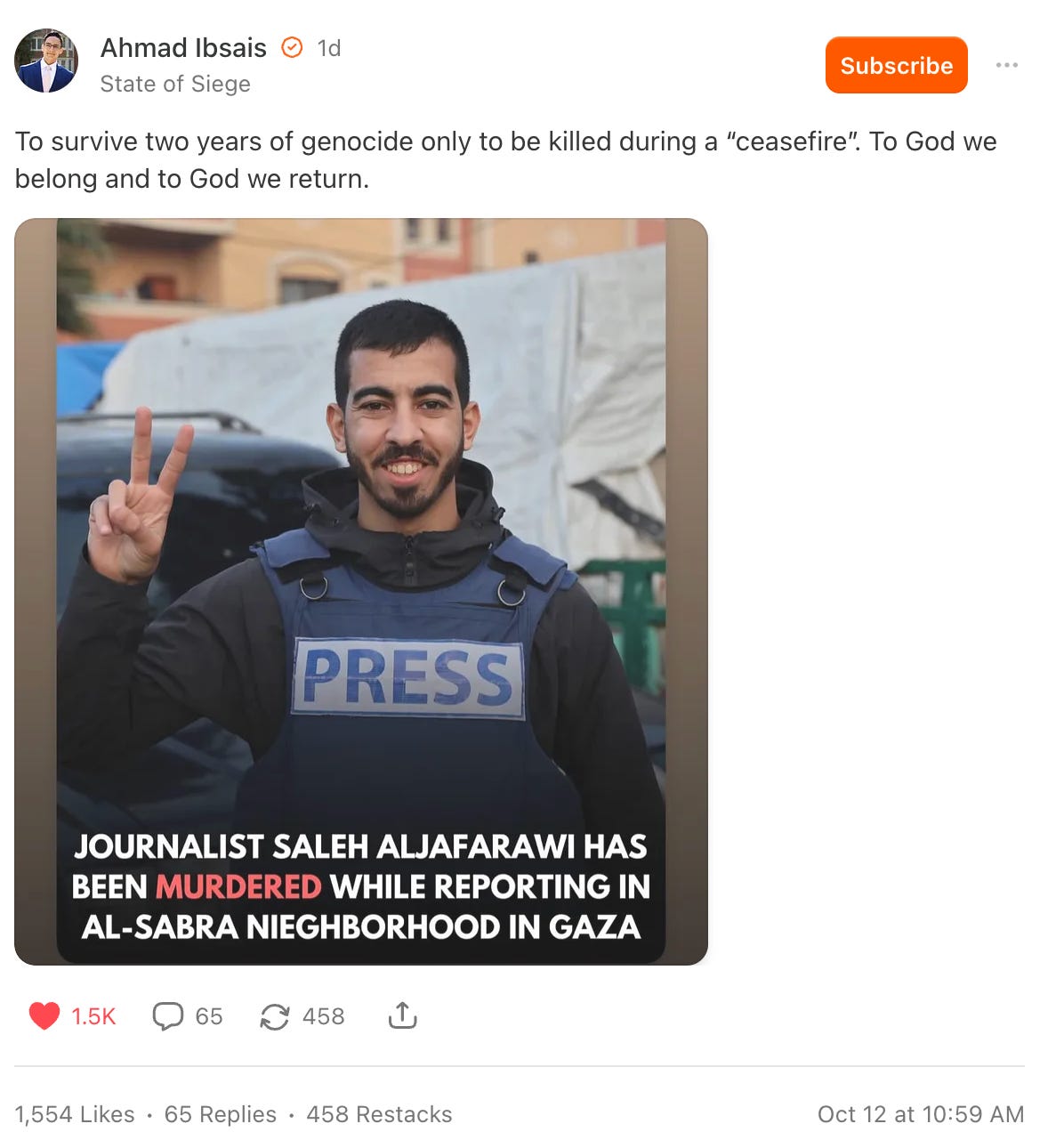
And even in the ceasefire was announced, the killing continued. Palestinian journalist Saleh Aljafarawi — a familiar face to many who have followed his on-the-ground reporting — was murdered by an Israeli gang just two days later on October 12, 2025.
So the question remains: now what?
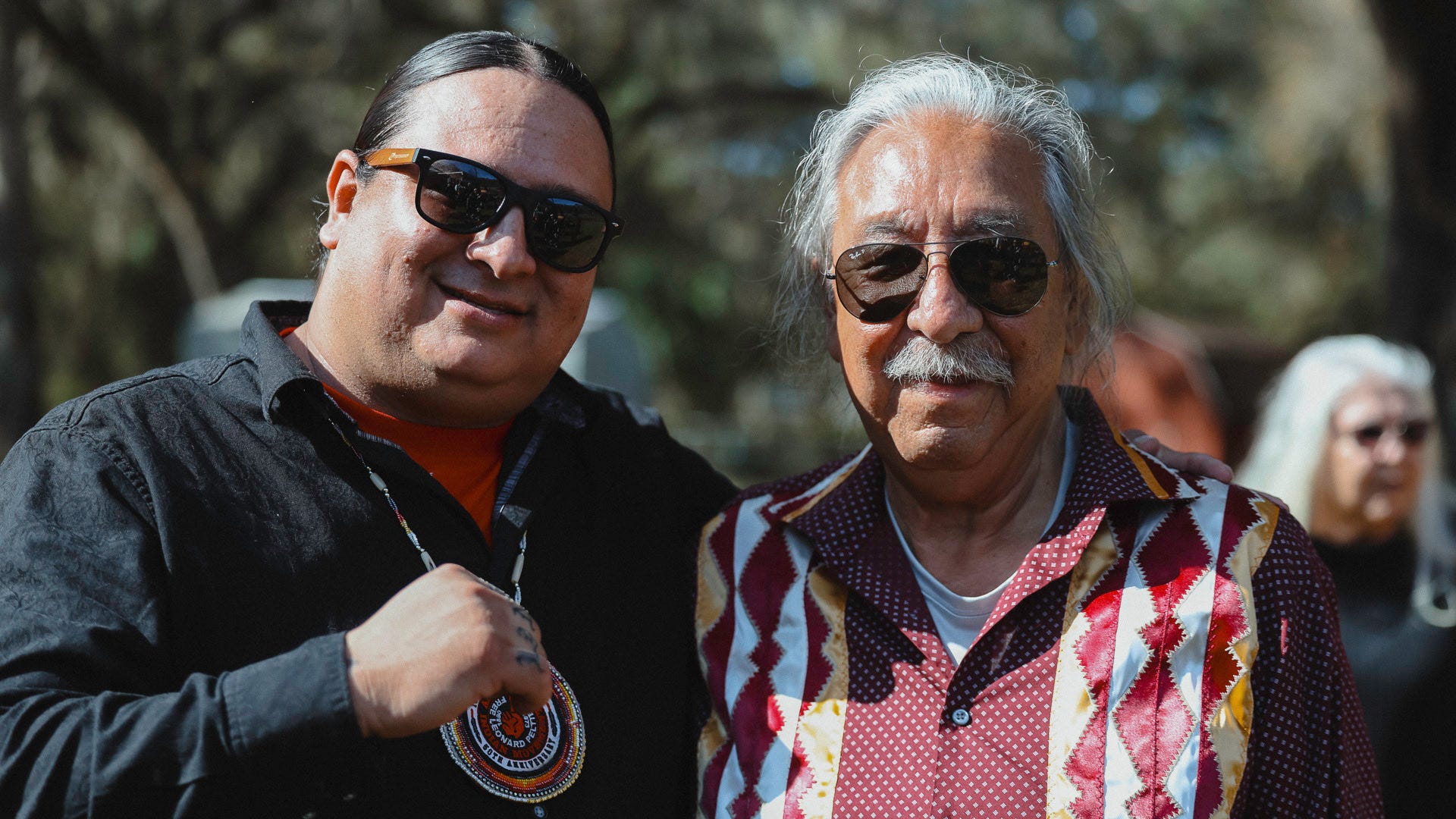
At the end of May I had the privilege of sitting down with Nick Tilsen, an Oglala Lakota land defender and organizer who is also Jewish. Nick is the President and CEO of NDN Collective, the largest Indigenous Advocacy organization in the country.
Our conversation, recorded months before Friday’s announcement, feels even more urgent now. Nick speaks with a clarity that cuts through the noise: Zionism and white supremacy are one in the same — systems built on land theft, racial hierarchy, and control. His words echo the stance of groups like Jewish Voice for Peace, who remind us that standing against genocide and apartheid is a profoundly Jewish act of solidarity. 🎙️Listen to Its Never A Strategy To Remain Quiet.
Nick draws direct lines between Indigenous resistance across Turtle Island and Palestinian liberation, between the carceral logics of settler colonialism and apartheid structures that mirror one another in the denial of belonging and freedom. For him, it’s not theory; it’s lived experience. And it’s a story everyone should hear — especially at a time when people are being gaslit into believing that Palestinian solidarity is something to fear, rather than a moral necessity.
What struck me is how Nick carries both identities without collapsing into contradiction. For him, Jewishness isn’t synonymous with Zionism; it’s a lineage of resistance and moral clarity. His Lakota teachings root him in community and place while his Jewish ancestry reminds him that liberation is collective or it isn’t at all.
“We have to stand in solidarity with people that are being persecuted today,” he told me. “And the act of doing that is the act of being Jewish.”
When I listened again today, I realized how much this conversation can serve as a guide for the moment we’re in — a moment when ceasefire headlines risk numbing us into complacency instead of propelling us toward justice. We also talk about LandBack as a global movement for repair and return, and about the decades-long campaign to free Leonard Peltier, the Indigenous political prisoner who spent nearly fifty years behind bars. As we now watch Palestinian prisoners being released in real time, those struggles feel deeply connected — bound by the same longing for sovereignty, safety, and the right to live free on one’s own land.
The ceasefire may stop the relentless bombing but it doesn’t end 77 years of occupation and counting. At a time when Palestinian solidarity is being silenced — even in environmental circles that I’ve experienced personally — it bears repeating: environmental and climate justice means justice for Palestine. The only way forward is through Palestinian self-determination.
Nick’s words remind us that silence is not neutrality, and quiet is not peace. It’s never a strategy to remain quiet, not when voices are being buried alongside the truths they try to tell. Solidarity demands that we speak, act, and imagine beyond the systems that confine us: toward a world built on sovereignty and collective freedom.
🚗 Under the Hood
My conversation with Nick was the first episode we recorded of A People’s Climate. I remember putting on my navy blue PRESS shirt in solidarity with journalists in Palestine, shortly after Hossam Shabat, a 23-year-old Palestinian correspondent in northern Gaza, was killed by Israel.
There’s a kind of grief that erases language. When I learned Hossam had been senselessly murdered, every word felt hollow. How do you write when the storytellers are gone? When nearly every journalist in Gaza has been killed by US backed state-sanctioned violence? In moments like this, I think back to my conversation with Nick and the moral clarity he brought to Palestine — a clarity rooted in truth-telling, even when the forces working to silence you feel insurmountable. After so much loss, what remains is the responsibility to keep sharing their words.
Today, on Indigenous Peoples’ Day, I wear my PRESS shirt again — for Saleh Aljafarawi, and for every journalist who was murdered while trying to show the world what it means to live under apartheid, settler-colonialism, and occupation first-hand. This episode is for them.
🎙️More from A People’s Climate
Listen to Episode 2: Mass Movements, with Patrisse Cullors
Listen to Episode 1: Unreasonable Women, with Diane Wilson
Listen to A People’s Climate trailer
💬 Have questions or feedback? We’d love to hear from you. Email us at hello@peoplesclimate.org.